
From felted wool to richly coloured leather, Polène’s winter handbags invite a more interesting question than which shade belongs with a coat. Which designs still make sense when the season changes?
It is remarkably easy to sell someone a winter handbag. Give a familiar design a darker colour, introduce a woollen detail, photograph it beside an expensive coat and the season is apparently taken care of. The harder task is making a bag worth carrying in March, when the coat has gone back into storage and the supposed urgency of winter dressing has evaporated.
Polène has a more interesting proposition than a change of palette. Across its winter selection, the French label revisits the Cyme, Mokki and Numéro Neuf in felted wool, deep leather colours and different sizes. Some pieces make an immediate seasonal statement. Others do very little that announces winter at all, which may be precisely why they are the better purchase. The distinction matters. The real test is whether its appeal survives the season that supposedly justified it.
Three questions separate the convincing designs from the decorative ones. Does the material change what the bag brings to an outfit? Does the design make the demands of ordinary life easier rather than harder? And would the same bag be attractive when the weather has nothing to do with the decision? Polène’s most successful winter pieces have answers to all three.
Wool is the boldest move, but not the easiest one
The Felted editions are the most recognisably wintry bags here. Polène shapes knitted wool panels to fit the leather sections of existing designs rather than hanging a removable seasonal detail from a handle. The result feels integrated with the bag’s design. On the compact Mokki Mini, the meeting of wool and leather draws the eye towards the folded body without introducing a new colour or an unnecessary embellishment.
The Felted Ebony Mokki Mini is the stronger of the two dark versions. Its brown-black depth leaves enough separation between wool and leather to make the change legible. Felted Anthracite Black is more discreet, and will appeal to anyone who wants the material rather than the colour to do the work. Neither transforms the Mokki into an entirely different handbag. That is their success. The bag retains its recognisable form and simply offers another reason to look at it.


The larger Mokki in Felted Mist takes a more confident risk. Pale grey in winter is often more interesting than the predictable procession of black and burgundy, especially when worn against charcoal, navy or camel. It is also less forgiving of neglect. This is not a bag to treat as a substitute for a weatherproof tote. Polène advises protecting its wool from water and friction, a point worth considering before imagining it accompanying every wet commute. The appeal is real, but so is the responsibility that comes with it.
The felted Cyme makes a different argument. Its sides can be left open or tucked inward, changing how the bag appears without asking its owner to swap accessories. On the full-size Felted Anthracite Black, wool occupies a broader area and makes a stronger impression. On the Felted Ebony Cyme Mini, the idea is concentrated in a smaller piece with an entirely different presence. The full-sized version is better suited to carrying more through a long day. The Mini is the more deliberate choice for someone who already has that job covered.


There is a useful limit to the wool story. These are attractive seasonal editions, not all-weather performance bags. Their special materials require a little more thought about storage, rain and rubbing against clothes. For a carefully chosen winter accessory, that is reasonable. For an everyday bag expected to endure indifferent treatment, leather may be the more persuasive answer.
The Cyme has the advantage of two personalities
One of Polène’s better ideas requires no winter-specific material at all. The Cyme changes when its sides are pulled open or tucked in. With the straps outside, it reads as an open, basket-like tote. With the sides folded inward and the straps crossing inside, the bag becomes more contained. This is not a miraculous conversion, but it is a meaningful one. A recognisable everyday bag can respond to different situations without changing its essential purpose.
That makes the Cyme a particularly good vehicle for winter colour. The Cyme Mini in Plum is the boldest of the three smaller leather versions selected here. It brings a deep berry note to an accessory that could easily have been rendered in standard black. Candied Chestnut is softer, warm without being sugary, and works particularly well for someone whose winter wardrobe already contains brown, cream and navy. Root is the least insistent, an earthy option for those who want the shape to attract attention before the colour does.
They are alternatives, not a podium. Plum is likely to be the most satisfying choice if the point of buying a new bag is to introduce something different. Candied Chestnut makes an easier partner for a familiar wardrobe. Root asks for less attention. What matters is that the three colours create three distinct reasons to choose essentially the same design.

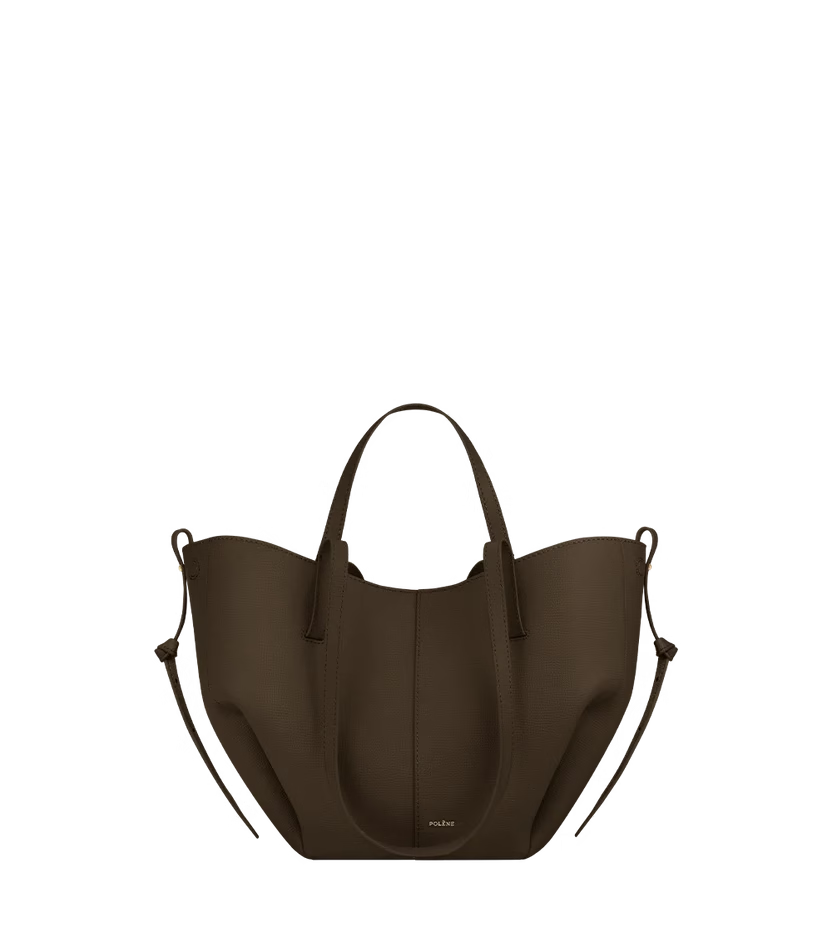

At full size, the differences become more pronounced. The Cyme in Deep Blue makes an intelligent alternative to black. It has the same versatility without looking quite so expected. The Cyme in Glade is more conspicuous, and better suited to someone who welcomes green as a central accessory colour rather than an occasional accent. The Cyme in Black Cherry feels most closely associated with the cold months, although that richness should still look convincing in autumn and spring. The Cyme in Camel is the enduring option, less overtly seasonal and arguably all the better for it.
Black Cherry makes the most immediate winter impression, but Camel may be the more interesting long-term investment. A colour need not advertise the season to be right for it. And since the Cyme’s appeal begins with its changing form, there is no obligation to make its colour do all the talking.
The Mokki takes the everyday question seriously
Where the Cyme is about how a tote can change its appearance, the Mokki is more concerned with what happens after the bag leaves the photograph. Its divided interior, flap and adjustable strap offer a degree of organisation that matters when there are keys, a phone, gloves and the other small inconveniences of winter to accommodate. It is still an attractive, deliberately designed handbag, but one with an argument beyond the way it looks.
The smaller Mokki in Plum is a particularly pleasing example. The folded leather gives the colour somewhere to settle without becoming decorative fuss, while the darker shade lends a compact bag a sense of occasion. Candied Chestnut is the easier everyday companion. It sacrifices some of Plum’s immediacy but gains flexibility alongside lighter outerwear and other neutral colours. Choosing between them is less a question of taste than of what is missing from the wardrobe already.


In the larger Mokki, Mokki in Deep Blue offers the most persuasive combination of character and usefulness. Deep Blue is rich without being precious, and the divided body gives the design a practical reason to accompany someone through a full day. The Mokki in Glade is an excellent alternative for a more adventurous colour choice, though it will ask more of the clothes worn beside it. A strong green bag is never truly anonymous, however good its compartments.
This is where Polène makes its clearest case. Winter does not call for a special category of handbag so much as a bag that works with the heavier, more demanding clothes people wear at that time of year. The full-size Mokki carries that argument better than a tiny occasion piece. It offers considered organisation without looking like luggage, while colour supplies the pleasure that good accessories ought to bring.
The Numéro Neuf proves there is room for pleasure
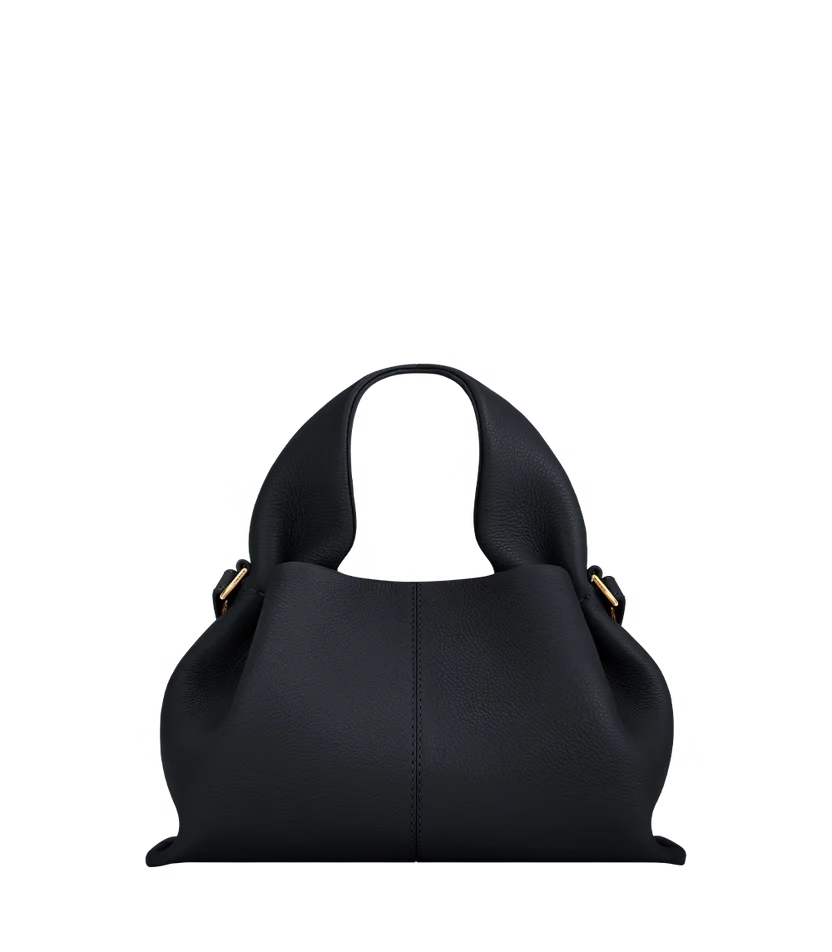
Not every handbag is hired to perform a daily shift. The Numéro Neuf designs have a different appeal, with gathered leather and a softer, rounded body that favours the pleasure of the object itself. There is nothing wrong with that. It simply helps to understand what kind of purchase is being made.
The Numéro Neuf East West in Plum moves away from the gathered Mini by lengthening the design into a horizontal shoulder bag. Its zip closure is a practical advantage, especially for anyone who finds an open or magnetic fastening insufficient on crowded journeys. The plum leather brings the seasonal note, but the more significant difference is the way the bag is carried and secured. This is a genuinely different proposition from the smaller Numéro Neuf, not merely another colour in the family.

The Numéro Neuf Mini is more intimate in scale. Deep Blue is the easiest of the three versions here to wear regularly, particularly with the greys and darker neutrals that often dominate winter clothes. Black Cherry has greater drama and is the most expressive choice when the bag itself is meant to be noticed. Root makes a subtler case, relying on the gathered leather and hand-sewn details rather than a striking shade.
None is inherently the best. Black Cherry makes a strong case for an evening or a more deliberate outfit, while Deep Blue is easier to bring into rotation. Root is for someone already won over by the design and less interested in making a seasonal statement. The distinction may sound obvious, but it is more useful than pretending every version solves the same problem equally well.


The bag worth buying when winter is over
The most convincing piece in this selection depends on what is being asked of it. For a distinctive winter addition, the Felted Ebony Cyme Mini has genuine appeal, provided its owner accepts the extra care. For versatility and a sense of occasion, the Black Cherry Cyme gives an established design a memorable colour. For regular use, the Deep Blue Mokki is harder to argue against. Its compartmentalised interior is more than an attractive detail, and its colour should remain useful well beyond the coldest months.
There is also an argument for the less obvious choice. The Camel Cyme may make fewer seasonal promises, but that is precisely why it belongs in the conversation. A winter handbag should not be judged by how effectively it imitates a winter coat. It should be judged by whether its material, colour and usefulness make sense together. Sometimes the most compelling thing about a bag bought in November is that nobody would think twice about seeing it in April.


